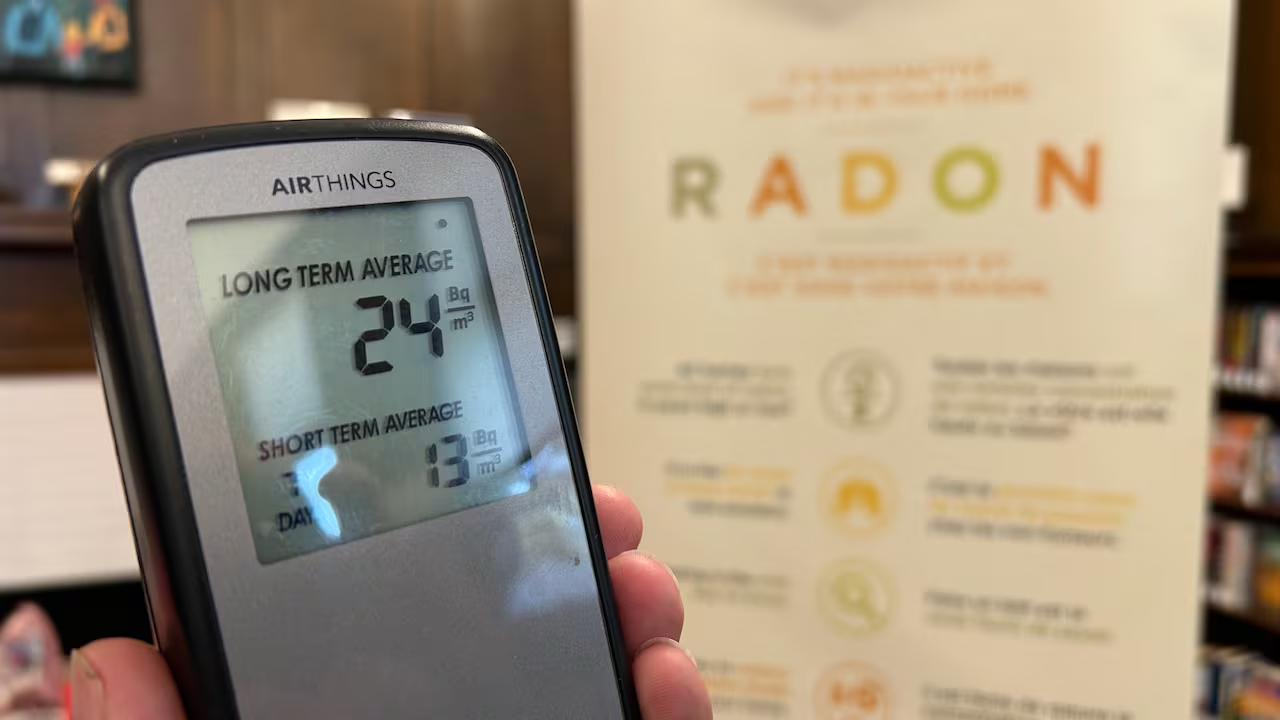
Radon gas testing isn’t a one-and-done task, even though most people treat it that way. You test once, see a number, file it away, and never think about it again. But radon levels in a home can change over time, and a result from five years ago may not describe your house today.
So when does it make sense to test again? Here are six situations where retesting is worth your time, plus what the numbers mean and what to do with them.
Why One Radon Test Doesn’t Last Forever
Radon is a naturally occurring radioactive gas that forms when uranium in soil and rock breaks down. You can’t see it, smell it, or taste it. It seeps up from the ground and enters homes through cracks in the foundation, gaps around pipes, sump pits, and floor drains.
Radon is measured in picocuries per liter of air, written as pCi/L. In the United States, the EPA recommends taking action when a home tests at 4 pCi/L or higher, and suggests considering action between 2 and 4 pCi/L. Because radon is the second leading cause of lung cancer after smoking, keeping up with testing is a health matter, not just a box to check.
Here’s the catch. Radon levels move. Weather, soil moisture, season, and changes to your house all affect how much gas gets in. That’s why one reading is a snapshot, not a permanent answer.
1. It’s Been Two Years Since Your Last Radon Test
The EPA recommends retesting at least every two years, even if your earlier result was low. That’s a simple rule, and it’s the one most homeowners miss.
Think of it like checking the batteries in a smoke detector. Nothing looks wrong, so you assume everything is fine. A routine retest confirms it. If you’ve lost track of when you last tested, that’s reason enough to schedule one now.
2. You’ve Renovated, Remodeled, or Changed Your Home’s Structure
Renovations can change how air moves through a house. Finishing a basement, adding an addition, replacing windows, sealing up drafty areas, or installing a new HVAC system all affect airflow and pressure.
For example, a tighter, better-insulated home may hold radon longer because less fresh air flows through. Digging, foundation work, or new slab pours can also create new pathways for gas to enter. If you’ve done any of this, retest once the work is complete and the space is in normal use.
3. You’ve Started Using a Basement or Lower Level as Living Space
Radon is usually highest at the lowest livable level, since that’s closest to the soil. A basement used for storage might not matter much. A basement turned into a bedroom, home office, playroom, or gym changes how much time you spend breathing that air.
If your family’s use of the home has shifted, your exposure has too. Retest in the new living area, and make sure the test is placed where people actually spend time.
4. You Had a Radon Mitigation System Installed, or It Hasn’t Been Checked Lately
A radon mitigation system is a setup that pulls radon from beneath your foundation and vents it outside. The most common type is called sub-slab depressurization. In simple terms, a pipe and a fan draw gas from under the floor and send it safely above the roofline.
These systems work, but they aren’t set-and-forget. Retesting matters in two cases:
- After installation: To confirm the system actually lowered your levels.
- On a regular schedule: The EPA suggests retesting at least every two years after mitigation, since fans can wear out and seals can fail.
Many systems include a manometer, a small gauge that shows the system is running. If that gauge looks off, or you can’t hear or feel the fan, schedule a test and a system check.
5. There Are Big Changes Outside the Home or in the Ground
Radon comes from the soil, so changes to the ground around your house can matter. Heavy construction nearby, major excavation, an earthquake, shifting soil, or new cracks in your foundation can all alter how gas travels.
Seasonal shifts matter too. Frozen ground and heavy snow can trap soil gas and push more of it indoors, while heating a closed-up house creates suction that pulls air from the ground. If your earlier test was taken in a different season, a second reading gives you a fuller picture.
6. You’re Buying, Selling, or Moving Into a Home
Many people ask, “Is a radon test required when buying a home?” The answer depends on where you live. Federal law doesn’t require it for every sale, but some states and local areas have disclosure rules, and many lenders and buyers request testing as part of a real estate transaction. Check your state’s requirements or ask your agent.
If you’re selling, a recent test gives buyers confidence. If you’re buying, an older seller’s result may not reflect today’s conditions, especially if renovations have happened since. A fresh home inspection add-on test during the sale gives you current data before you commit.
Short-Term vs. Long-Term Radon Tests: Which Should You Use?
Knowing when to retest is half the job. The other half is choosing the right method.
- Short-term tests: These run for two to seven days and give a quick answer. They’re common during real estate deals.
- Long-term tests: These run for more than 90 days and show an average across changing conditions. They’re better for understanding your typical exposure.
- Continuous radon monitors: Electronic devices that track hourly readings, which helps spot patterns.
A professional tester follows closed-house conditions during a short-term test. That means keeping windows and exterior doors shut except for normal entry and exit, so the result isn’t skewed. Do-it-yourself kits are available, but Professional Radon Gas Testing in Denver, CO Aspen Leaf reduces placement mistakes and gives you a reliable result you can use in negotiations.
What to Do After a Retest Shows High Radon Levels
If your result comes back at or above 4 pCi/L, don’t panic. High radon is common and fixable.
- Confirm the result. Many experts recommend a follow-up test before making repairs.
- Talk to a certified mitigation professional. They’ll design a system that fits your home’s foundation.
- Ask about cost. Pricing for radon mitigation depends on the foundation type, home size, and system design.
- Retest after installation. This confirms the system works.
A mitigation system often lowers levels significantly, and the sooner you act, the less long-term exposure your household has.
Common Radon Testing Mistakes and Misconceptions
A few ideas keep people from testing or lead them to test incorrectly:
- “My neighbor’s house tested low, so mine will too.” Radon varies house by house, even on the same street.
- “New homes don’t have radon.” Any home, new or old, can have elevated levels.
- “Opening windows during the test is fine.” It can lower the reading and make it inaccurate.
- “If I have no symptoms, I’m safe.” Radon causes no immediate symptoms, which is why testing is the only way to know.
- “Testing is a one-time job.” As covered above, levels change.
Schedule Reliable Radon Gas Testing for Your Home
Radon levels aren’t fixed, and your last test only tells you where you were at that moment. Retest every two years, after renovations, when your lower level becomes living space, after mitigation work, when conditions around your home change, and any time you buy or sell. Each retest is a small step that protects your household’s health.
If it’s time to retest, Aspen Leaf Property Inspections can help. We provide professional radon gas testing backed by inspectors who explain your results in plain language and point you to the next step. Call (720) 750-3234 or visit to learn more about how we can help you.
Frequently Asked Questions About Radon Gas Testing
Is radon testing really necessary?
Yes. Radon is invisible and odorless, so testing is the only way to know your level. Because it’s linked to lung cancer, it’s a smart step for any homeowner.
How often should I retest for radon?
At least every two years, and any time you renovate, change how you use your lower level, or notice changes to your foundation or mitigation system.
Is a radon test required when buying a home?
Not always. Requirements vary by state and locality, but many buyers and lenders ask for it. Testing during the purchase gives you current information.
How long does a radon test take?
Short-term tests usually take two to seven days, while long-term tests run more than 90 days. The right choice depends on your goals and timeline.
How much does radon gas testing cost?
Cost depends on the test type and who performs it. DIY kits are cheaper, while professional testing costs more but improves accuracy and reliability.